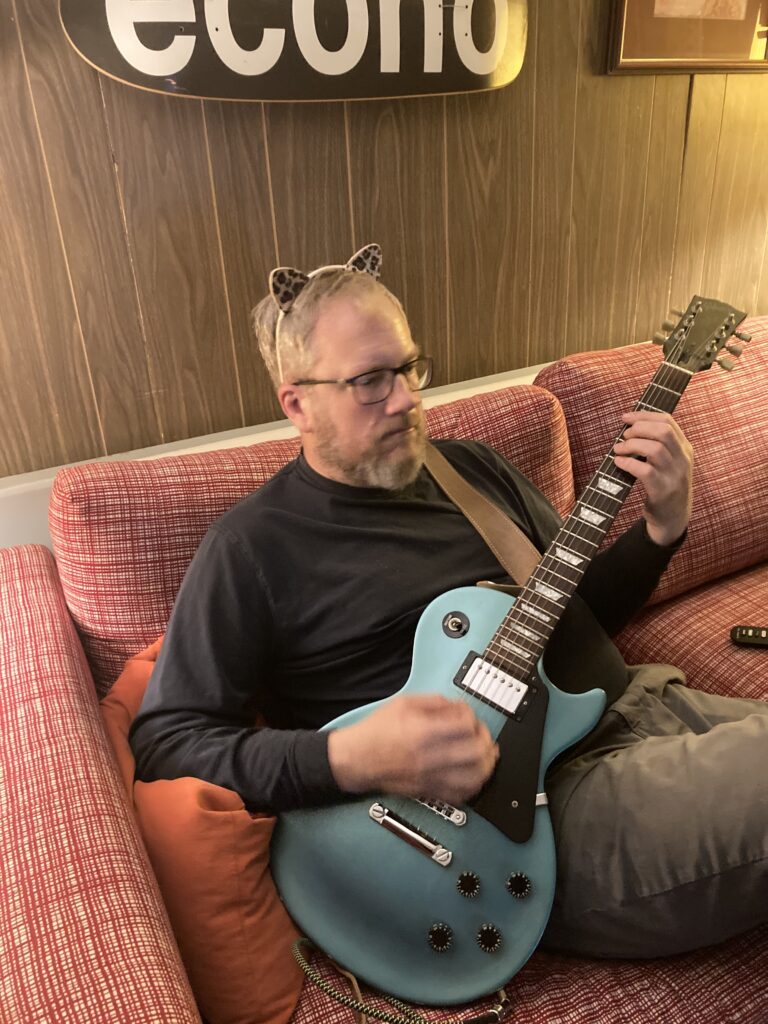
When we first heard from Daniel in 2019, he was just beginning to rediscover a piece of himself that a spinal cord injury had threatened to take away—his music. After sustaining a cervical spinal cord injury in 2018, Daniel faced significant challenges with hand dexterity and delayed reactions, making something as simple as holding a guitar pick nearly impossible. But instead of stepping away from what he loved, Daniel got creative.
He designed an adaptive guitar pick that allowed him to play again. What started as a workaround became a powerful tool for healing—physically, mentally, and emotionally.
Today, Daniel reflects on his journey with gratitude. “I’m grateful for my mobility and all the function I did get back,” he shares. That recovery didn’t happen by chance. He committed himself to physical and occupational therapy through a local community college program, showing up consistently and putting in the work—even when progress felt slow.
Despite ongoing challenges with hand function, Daniel has made incredible strides. He’s regained enough dexterity to type on a keyboard with improved speed and fluency, boosting his confidence and performance at work. He even set a personal milestone by completing a 5K on a treadmill—an achievement that once may have felt out of reach.
Interestingly, one of the most pivotal periods in Daniel’s recovery came during the COVID-19 pandemic. While the world slowed down, Daniel leaned in. “Being stuck at home actually supported my growth,” he says. Virtual guitar lessons gave him structure and an outlet, helping him strengthen both his skills and his sense of purpose.
Music—and art more broadly—became more than hobbies. They became lifelines.
“I wanted to find a positive outlet that I could pursue, free of negative or addictive side effects, so, because of the pandemic and my injury, I turned to music and art. The guitar served several purposes. it was a fantastic pandemic time killer and, because I really felt a void from not being able to skateboard, it also gave me a similar sense of independence and accomplishment while also serving a great therapeutic tool for my hands and mental focus.”
Daniel is open about the mental health challenges that followed his injury. He describes experiencing symptoms of PTSD and panic, especially related to falling—the cause of his injury. Through professional support, he’s been able to work through those fears and develop healthier coping strategies.
“I discounted the value of therapy at first,” he admits. “But I would absolutely encourage others to seek out psychological support. Even if it’s just to learn how to navigate this new life—it’s worth it.”
That message extends to the broader community as well. Daniel encourages others to explore creative outlets like music and art, not only for emotional healing but also for physical benefits. “It helped my depression, and it actually helped me regain some finger function and dexterity,” he says.
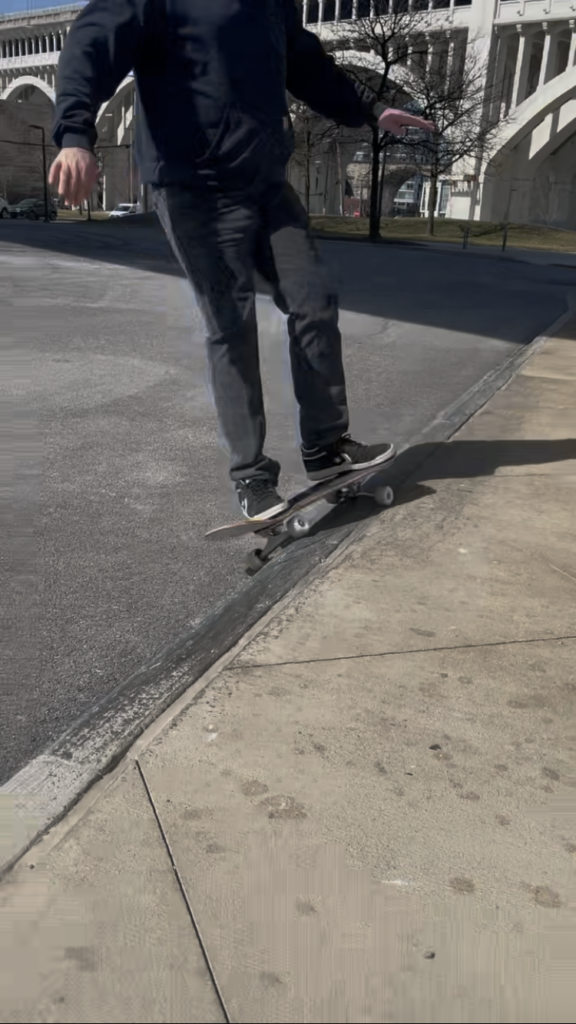
Outside of music, Daniel has returned to many aspects of his life pre-injury. He’s back at work in the same role, supported by an accommodating team. In the early days, he relied on his wife for transportation, commuting together until he was able to drive independently again. He’s even gotten back on a skateboard—taking it slow, but embracing the joy of movement.
His experience has also sparked a deeper awareness of accessibility—especially in the workplace. Working in older buildings that often lack modern accommodations, Daniel has become an advocate for change. From relocating meetings to accessible spaces, to rethinking library layouts and advocating for adjustable-height desks, he’s using his voice to make a difference.
“SCI made me more aware of how people actually move through these spaces,” he says. “And where those spaces fall short.”
One particularly challenging aspect of his recovery was sensory changes. Daniel describes how even gentle sensations—like petting a dog—could feel intensely painful in his hands. With the help of his therapy team, he’s been able to address both the physical discomfort and the anxiety that came with it.
Looking back, Daniel emphasizes the importance of not overlooking any part of the recovery process.
“Don’t discount therapy—physical, occupational, or psychological,” he says. “And join support groups. You never know where help will come from.”
Daniel’s story is one of resilience, creativity, and growth. Through innovation, community, and a willingness to try something new, he’s not only adapted—he’s thriving. And in the process, he’s helping create a more accessible world for others along the way.
