
by Kim Anderson, PhD
For decades, spinal cord injury (SCI) rehabilitation has largely operated on a “one size fits all” model and that size was dominated by information based on men with SCI. While women make up nearly one-fifth of the SCI population in the United States, their unique biological needs and social experiences have often been overlooked, leaving many feeling “invisible” in the healthcare system.
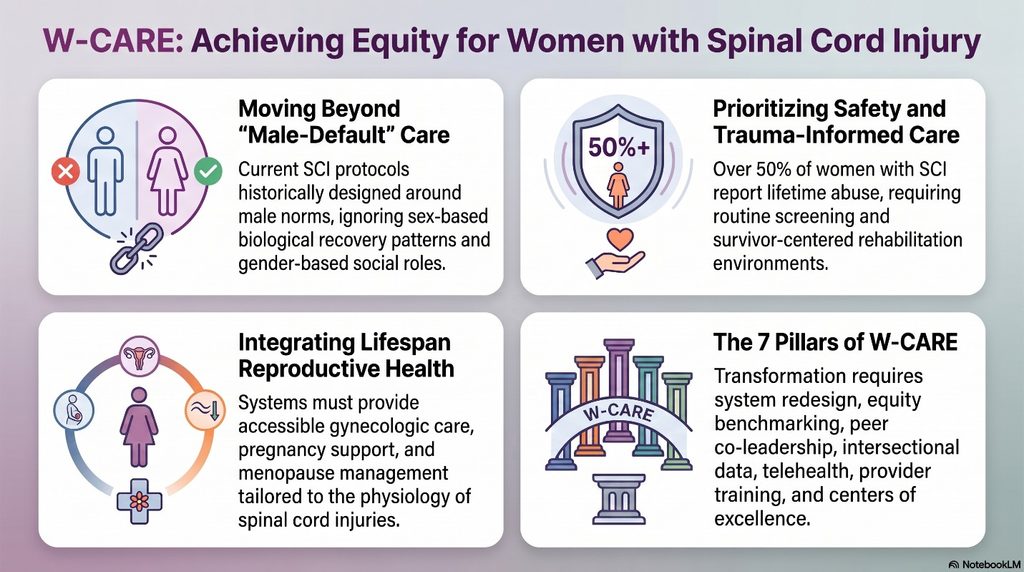
A team of SCI Model Systems researchers and clinicians, working closely with women who have lived experience with SCI, is changing that. They have developed the W-CARE Framework (Women-Centered Accessible Rehabilitation & Equity), a bold new plan to ensure that women receive care that is safe, equitable, and tailored to their specific lives.
What is W-CARE?
W-CARE isn’t just a list of suggestions; it’s a total system redesign in the way we think about women’s healthcare needs. It recognizes that a woman’s journey with SCI involves unique factors, from biological recovery patterns to reproductive health milestones like pregnancy and menopause.
The framework is built on several key pillars designed to transform care:
- Peer Co-Leadership: Women with SCI are no longer just patients, they are leaders, helping to design the very services they use.
- Lifespan Care: Establishing “Centers of Excellence” that support women through every stage of life, ensuring access to accessible gynecological care, Pap smears, and mammograms.
- Safety and Support: Addressing the high rates of abuse (reported by over 50% of women with SCI) through routine, private screening and trauma-informed care.
- Technology for Empowerment: Using telehealth and digital tools to bring expert care to women in rural areas or those with transportation challenges.
- Equity Benchmarking: A new tool called the Women’s SCI Equity & Safety Index helps hospitals grade themselves on how well they are meeting women’s needs, from providing private restrooms to training staff on female-specific physiology.
Why This Matters to You
This study highlights that many women with SCI face daily barriers that have been historically treated based on male-informed data, such as chronic pain or bladder and bowel dysfunction. Over 64% of women in one study cited these issues as major hurdles to participating in their communities. By moving away from male-default care, the W-CARE Framework aims to give women the autonomy and specialized support they need to lead healthy, empowered lives.
Whether it is ensuring a doctor’s office has an accessible exam table or training providers to understand how SCI affects menopause, this framework is a call to action to make the healthcare system work for everyone. The W-CARE Framework provides a holistic, equity-centered,
and lifespan-oriented model for transforming the lifelong care needed by women living with SCI.
Actionable Take-Home Points
- Advocate for Your Unique Needs: If you feel your current care is gender-neutral or missing the mark, use the concepts of the W-CARE pillars to start a conversation with your provider about sex-specific issues like reproductive health, bone density, or trauma-informed screening.
- Seek Peer Support and Leadership: Look for SCI groups that prioritize women’s voices. Your lived experience is a powerful tool for change; consider joining advisory boards or peer mentoring programs to help shape the future of SCI rehabilitation in your own community.
Full article:
Taylor HB, Robinson-Whelen S, Anderson KD, Monden KR, Coker J, Slocum C, Norah-Davis L, Wenzel L; SCIMS Women’s Health SIG. From Invisibility to Equity: Redefining Spinal Cord Injury Rehabilitation Through the Lens of Women’s Unique Needs. Top Spinal Cord Inj Rehabil. 2026 Spring;32(Suppl 1):95-102. doi: 10.46292/sci25-00133.
https://tscir.kglmeridian.com/view/journals/tscr/32/Supplement1/article-p95.xml
Resources on women’s health:
https://www.hereforwomenwithsci.org/Home
https://pmc.ncbi.nlm.nih.gov/articles/PMC7640910
https://blog.christopherreeve.org/en/life-after-paralysis/women-aging-with-spinal-cord-injury-part-1
https://blog.christopherreeve.org/en/life-after-paralysis/women-aging-with-spinal-cord-injury-part-2
