Shoulder pain is very common in people with spinal cord injury (SCI), particularly in those who use a manual wheelchair. The shoulders are not as sturdy as the joints in the legs, and they tend to wear down more easily. While a person who walks can rest their shoulders when they become painful, a person in a manual wheelchair must push to get to where they need to go.
The most common cause of shoulder pain in SCI is injury to the rotator cuff. The rotator cuff is a group of four muscles (supraspinatus, infraspinatus, teres minor, and subscapularis) that surround the shoulder joint. Together, they keep the shoulder in place and help with transfers, lifting, and rotational movements of the arm. While it’s great the shoulder is such a mobile joint (it allows you to touch the tips of your toes and top of your head!), this means that the surrounding rotator cuff muscles are very important for keeping the shoulder working properly.
In people who use manual wheelchairs, over time the rotator cuff is exposed to repeated strain. This can lead to rotator cuff tendinopathy, which means irritation and degeneration of the rotator cuff muscle tendons. In more advanced cases, this can progress to partial or full tears of the rotator cuff. Studies suggest that more than half of long-term manual wheelchair users with SCI will develop rotator cuff problems.
Although this problem is common, it is not inevitable. There are effective strategies to both prevent shoulder injury and treat symptoms early, before more serious damage occurs. In this and many other medical situations, an ounce of prevention is worth a pound of cure!
Treatment and Prevention
Exercises
The best way to prevent and treat most rotator cuff problems is to strengthen the muscles through exercise. Strong rotator cuff muscles keep the shoulder in place better and reduce strain from wheelchair pushing and transfers.
The best way to ensure you are strengthening your rotator cuff the right way is by working with a physical therapist. However, internet resources can be helpful as well. Below are some common rotator cuff exercises you may encounter when searching online. These can typically be performed using resistance bands or light weights.
External Rotation (with a resistance band or weight)
- Keep your elbow tucked close to your side
- Rotate your forearm outward against the resistance of the band, or while holding a weight
- Strengthens the infraspinatus and teres minor
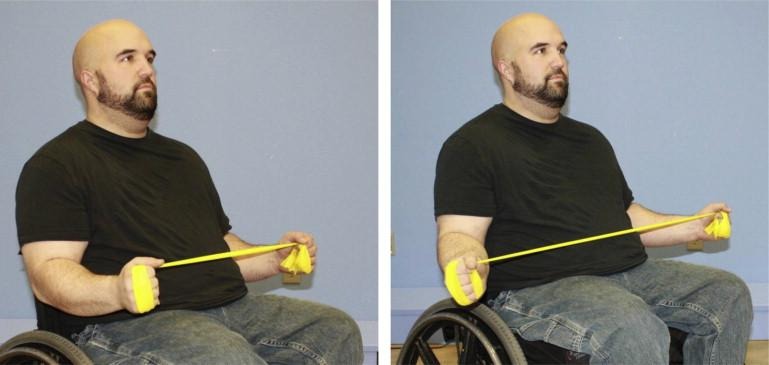
Internal Rotation (with a resistance band or weight)
- Start with your elbow at your side and your hand rotated away from your body (externally rotated)
- Pull the band inward toward your stomach, keeping your elbow at your side
- Strengthens the subscapularis, which supports shoulder stability
Scaption (with a resistance band or weight)
- Raise your arm forward and out to the side (about 30 degrees)
- Keep your thumbs pointing upward
- Gradually raise your arm up further, either with a weight or against a resistance band
- Targets the supraspinatus while minimizing strain on the joint
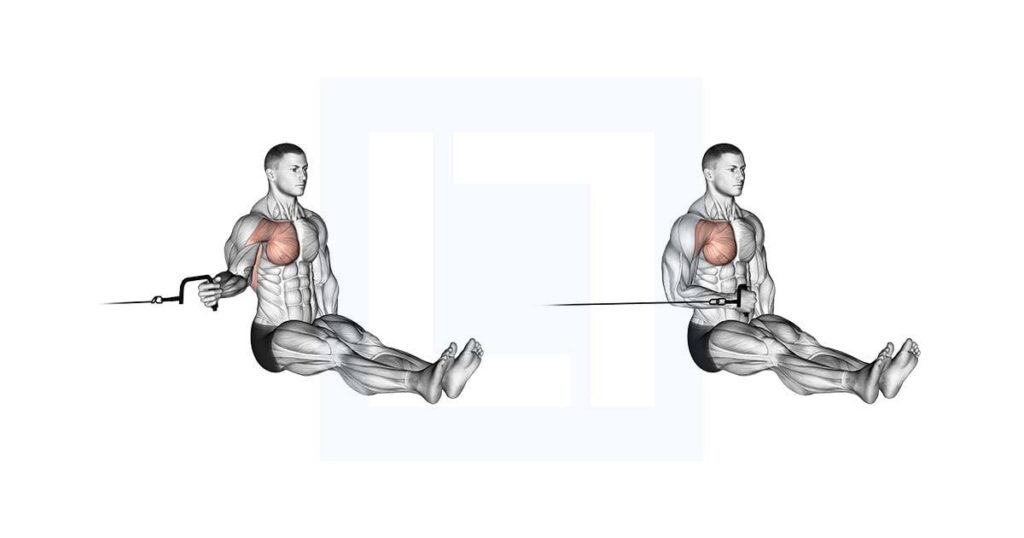
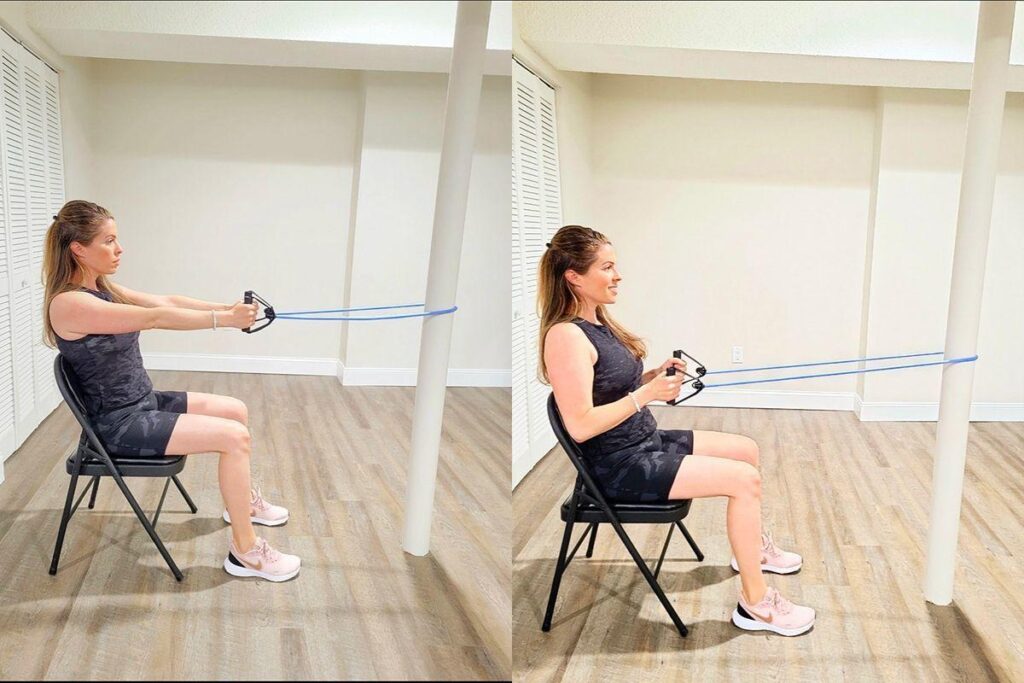
Seated Rows (with resistance band or weight)
- Put your arms straight out in front of you and grasp the resistance band or weight
- Pull your elbows backward while squeezing your shoulder blades together
- Strengthens lats, rhomboids, and trapezius
- While not rotator cuff muscles, strengthening these muscles improves posture and reduces stress on the rotator cuff
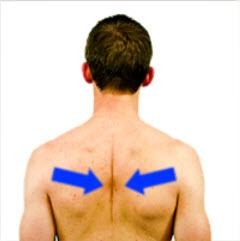
Shoulder Blade Squeezes (Scapular Retraction)
- Gently squeeze your shoulder blades together – think about trying to squeeze a penicil between your shoulders
- Hold briefly, then relax
- Strengthens the rhomboids and trapezius
- While not rotator cuff muscles, strengthening these muscles also improves posture and reduces stress on the rotator cuff
These exercises are often easy to perform at home or in a gym with minimal equipment. This isn’t an exhaustive list, and there may be other helpful exercises. Particularly when starting out, working with a physical therapist is strongly recommended, to ensure proper technique and avoid injury.
Consistency is critical. These exercises are most effective when done regularly, even when you are not experiencing pain.
Other Treatments
Anti-inflammatory Medications
Oral anti-inflammatory medications, such as ibuprofen, can help reduce pain and inflammation. These are typically used for short-term relief rather than as a long-term solution. Useful for occasional worsening of pain, or to control the pain to get back into doing physical therapy.
Corticosteroid Injections
Corticosteroid injections may be used to reduce inflammation, particularly when the rotator cuff becomes irritated as it rubs against the acromion (a bony structure above the shoulder). These injections can provide temporary relief but do not address the underlying cause. I often describe steroid injections to patients as a short-term fix to allow them to work hard in therapy. The steroid short isn’t going to fix the problem, but good physical therapy can.
Switching to a Power Wheelchair
In some cases, transitioning to a power wheelchair may reduce strain on the shoulders. However, when a patient transitions to a power wheelchair, they give up all of the exercise and physical activity they get by pushing a manual wheelchair. This often leads to weight gain, worsening cardiovascular health, and other negative effects. For these reasons, I rarely recommend this.
Surgery
Surgery is generally considered a last resort. Procedures may include repairing a torn rotator cuff or, in severe cases, shoulder joint replacement.
There are important limitations to consider:
- Research shows that exercise-based treatment can be as effective as surgery for many individuals with an intact rotator cuff
- Recovery from surgery often requires 4–6 months without wheelchair propulsion, which can be extremely challenging for those who rely on their arms to get around
Because of these reasons, I usually only think about surgery when everything else has been done, and there aren’t any other options.
Conclusion
Shoulder pain is a common and often progressive issue for people with SCI who use manual wheelchairs. The rotator cuff is particularly vulnerable due to the constant demands placed on the shoulders.
The most effective way to manage this is to prevent it before it starts. Regular rotator cuff strengthening exercises can significantly reduce the risk of injury and help maintain long-term function.
Think of these exercises like brushing your teeth. You do not wait for a problem with your teeth to start before starting to brush your teeth. In the same way, shoulder exercises should become part of your daily or weekly routine, even when you feel well. By prioritizing shoulder health early and consistently, you can preserve mobility, reduce pain, and maintain independence over time.
Dr. Ben Petrie
